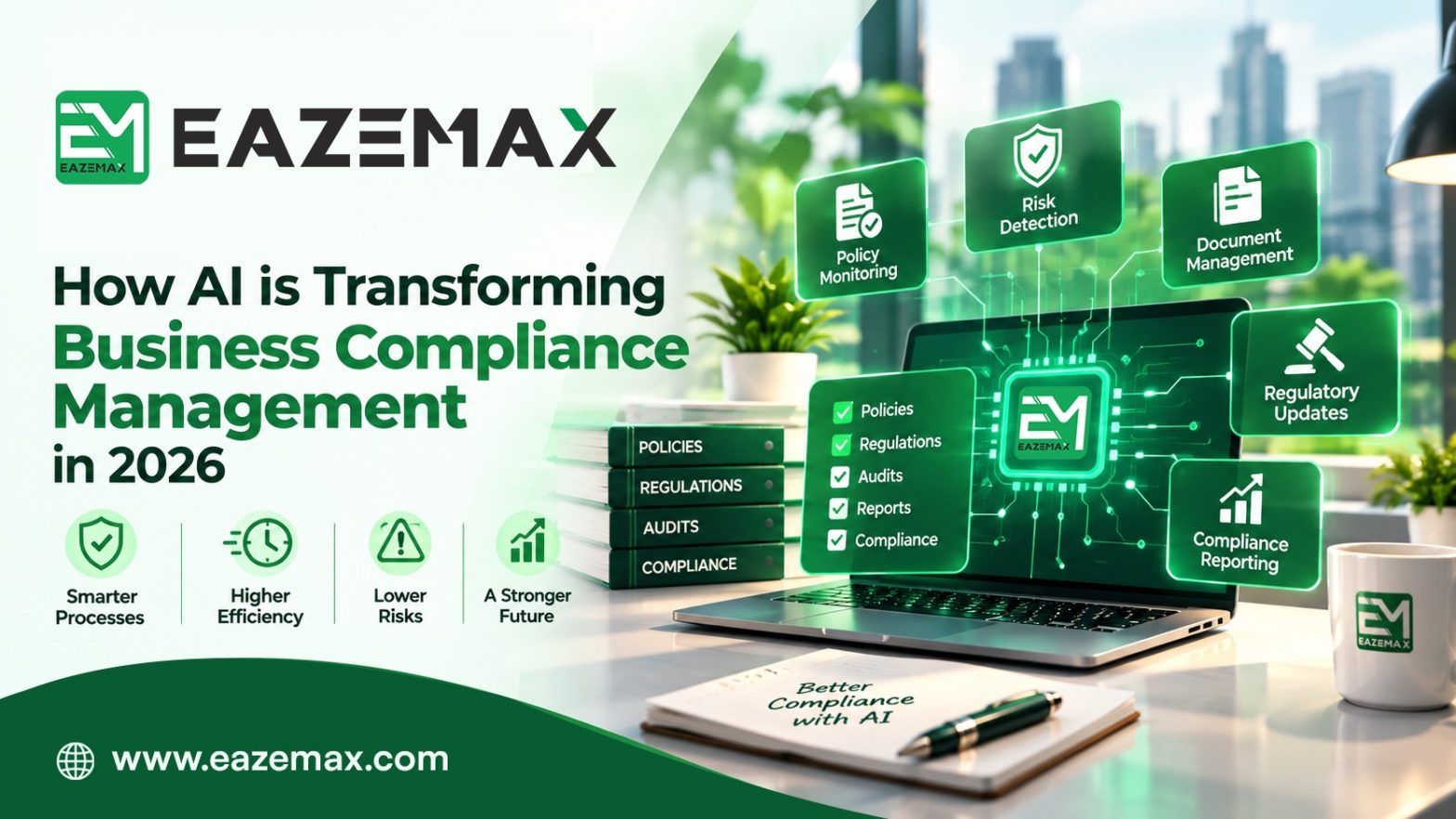
In 2026, regulatory compliance software has become a useful tool for organisations, as industries encounter faster updates, stringent scrutiny, and an unprecedented volume of liabilities. At present, businesses need to navigate the rising rules in finance, banking, insurance, healthcare, telecom, manufacturing, and IT services, often with outcomes that go beyond penalties. The things that relied on spreadsheets and manual coordination now seek real-time oversight, automated control mapping, and absolute audit readiness.
Companies with the statutory bodies rolling out dynamic, data-driven expectations are turning toward platforms that ease intricacy, centralise evidence, and reduce the risk of oversight. The blog illustrates the operations of effective regulatory compliance software solutions and their importance in modern governance.
Need for Regulatory Compliance Software in 2026 for businesses
As organisations deal with governance demands, more data-driven audits, and increasingly dynamic regulations, Regulatory Compliance Software is more crucial than in previous times. Apart from fulfilling regulatory needs, these platforms furnish practical benefits that improve functionality, reduce risks, and enhance overall compliance maturity.
Some benefits that businesses can gain from choosing modern compliance software are:-
Unified Regulatory Compliance View
Regulatory requirements may come from multiple agencies and bodies, each with its own deadlines, controls, and documentation standards. Without a unified system, such obligations end up scattered across emails, spreadsheets, and individual teams, creating gaps and inconsistencies.
For all statutory liabilities, regulatory compliance software provides a single source of truth, permitting organisations to:
- Assign ownership for each compliance requirement
- Maintain evidence and documentation centrally
- Avoid duplication, conflicts, and missed updates
Structuring compliance confirms it is traceable and aligned with regulatory expectations, rather than being fragmented across business units.
Improving Accuracy and Reducing Human Error
Version mismatches, missed deadlines, outdated templates, and incomplete evidence are inconsistencies that arise from manual compliance work.
Compliance software assists organisations in maintaining precision via:
- Automated evidence gathering
- Real-time dashboards
- Pre-defined regulatory templates
- Built-in validation checks
- Machine-readable audit trails
The result enhances reliability as well as builds a consistent, repeatable compliance procedure that can withstand scrutiny.
Enhancing Audit Readiness and Response Time
Now regulators anticipate quicker responses, clearer documentation, and complete audit histories. It is difficult to prepare audits without automation.
Audit readiness gets strengthened by compliance software via-
- Generating audit reports instantly
- Storing version-controlled documents
- Maintaining chronological evidence trails
- Tracking all approvals and sign-offs
The consequences increase the stress, risk, and time spent on statutory audits.
Allowing scalable compliance with the expansion of business
As organisations grow, enter new markets, onboard more customers, or expand digital services, their compliance burdens increase significantly.
The Regulatory compliance software supports scalability via:
- Automated onboarding checks (KYC, data consent, authorisations)
- Multi-jurisdictional rule mapping
- Configurable workflows for new business units
- Ability to handle larger data and compliance volumes without additional people
- Standardised processes that grow with the organisation
The same confirms that development does not expose the business to new risks or compliance gaps.
Strengthening Risk Management and Decision-Making
The newer compliance is tied to enterprise risk management. Compliance software fills the same gap by proposing-
- Early identification of control failures
- Real-time risk scoring and impact mapping
- Integration with audit and incident management systems
- Insights into trends, patterns, and recurring compliance issues
The transparency allows leadership to make decisions based on transparent, data-driven insights, instead of assumptions or outdated reports.
Reducing Legal, Financial, and Reputational Exposure
There is a rise in the financial and reputational cost of non-compliance. By ensuring the following points, the regulatory compliance software can reduce the issues-
- Timely compliance with all applicable laws
- Precise reporting and evidence
- Complete visibility into gaps and violations
- Well-documented efforts toward compliance
- Substantial defence during investigations or disputes
Eventually, making the organisation resilient and trustworthy to regulators, customers, and partners.
Capabilities of Leading Compliance Software
Perfect statutory compliance relies on how effectively a platform assists regulatory tracking, documentation, risk oversight, and audits. These specifications set aside a stronger compliance system from basic tracking tools.
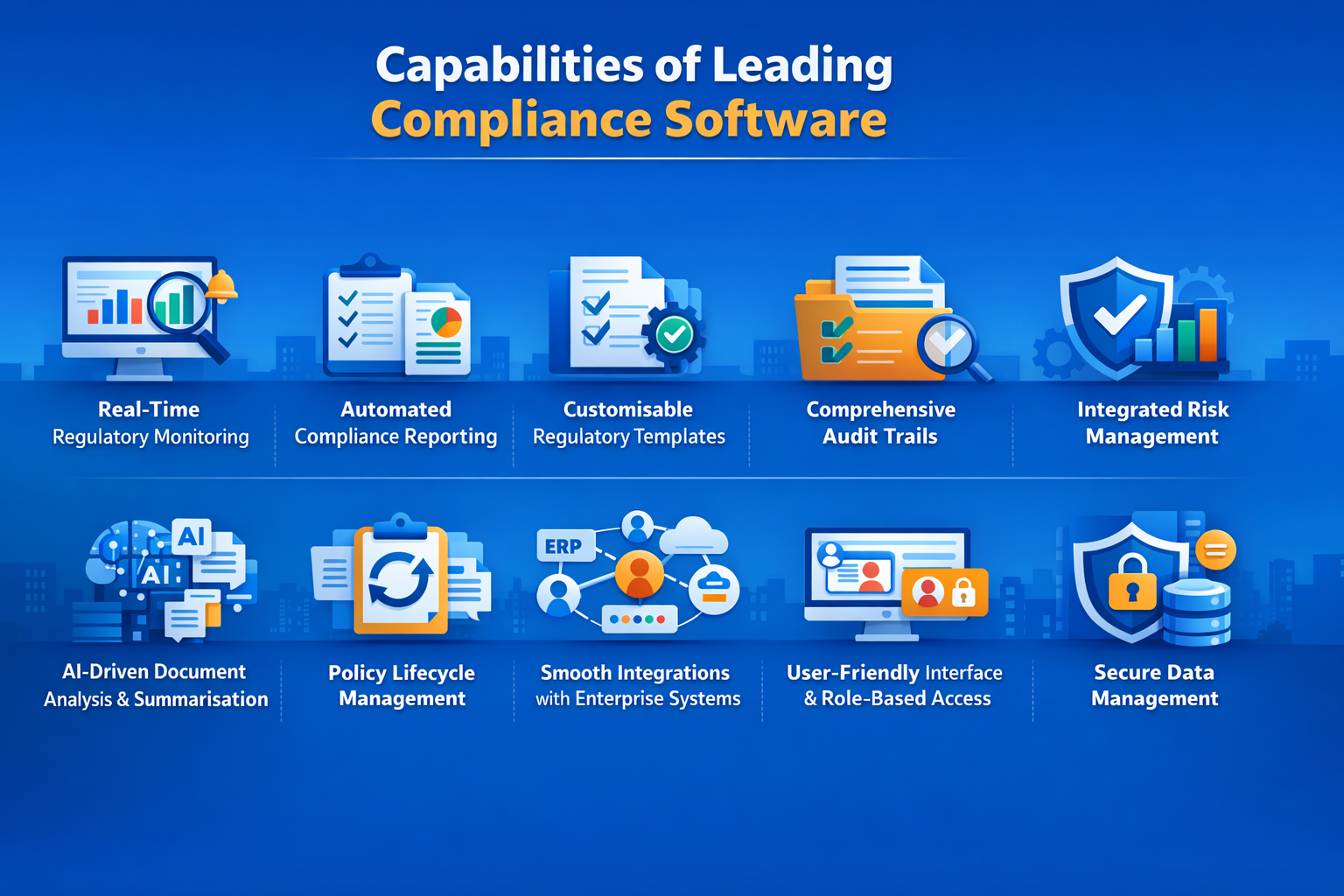
Real-Time Regulatory Monitoring
Real-time regulatory monitoring is crucial in a fast-evolving rulebook. The same feature checks for regulatory updates in various jurisdictions and alerts teams to revisions that may affect policies, controls, or reporting needs.
Staying compliant with regulations is crucial for organisations. Whether it’s a revision to the GDPR, a new clause under the DPDP Act, or updates from financial regulators like the RBI or SEBI, receiving instant alerts helps organisations stay informed about their compliance obligations. This proactive approach can prevent delays that might result in penalties.
Automated Compliance Reporting
For organisations managing regulatory workloads, manual reporting is slow and unsustainable. Automated compliance reporting collects evidence, validates data, and generates audit-ready reports with minimal manual intervention.
The same assures accuracy, enhances preparedness for audits and inspections, and frees teams from repetitive documentation tasks. With pre-built reporting templates, the platform supports accelerated submissions for financial, cyber, and data protection audits.
Read Also:- Best CA Office Management Software for Accounting Firms in India
Customisable Regulatory Templates
A one-size-fits-all approach fails in a multi-industry environment. Leading platforms propose customisable compliance templates aligned with industry frameworks such as ISO 27001, SOX, PCI-DSS, HIPAA, and sector-specific financial regulations.
Customisation confirms that organisations can tailor controls, workflows, and evidence to their unique statutory requirements, enhancing relevance and adoption across teams.
Comprehensive Audit Trails
Audit needs to be transparent. Complete audit trails keep a chronological record of all compliance activities, including document changes, approvals, user actions, policy updates, and evidence uploads.
The same traceability supports organisations to illustrate compliance, answer faster during audits, and determine procedure gaps before they convert into breaches.
Integrated Risk Management
Modern software combines regulatory workflows with risk management capabilities, allowing organisations to compute compliance risks in real time.
Areas of non-compliance could be determined early from the features such as risk scoring, impact analysis, and automated control mapping and provide recommended actions. The same method makes overall governance stronger and lessens the chances of obligatory violations.
AI-Driven Document Analysis & Summarisation
In 2026, AI has emerged as a key capability for organisations. Platforms that utilise AI-powered document analysis can automatically interpret regulatory documents, highlight changes, summarise obligations, and map clauses to internal controls.
This innovation reduces the reliance on manual interpretation and speeds up compliance decision-making.
Policy Lifecycle Management
Effective compliance requires a structured and repeatable policy process. Policy lifecycle management helps organisations efficiently create, review, update, publish, and retire policies while keeping a complete version history and obtaining necessary stakeholder approvals.
This capability is especially useful for large enterprises, where policies often span multiple departments and require periodic updates in response to regulatory changes.
Smooth Integrations with Enterprise Systems
Effective compliance depends on connected data. Top platforms integrate with systems such as:
- ERP
- IAM
- HRMS
- Ticketing tools
- Cloud platforms (AWS, Azure, GCP)
- Security tools (SIEM, DLP, IAM)
Such integrations consolidate proofs, automate control testing, and unify compliance workflows across the organisation.
User-Friendly Interface with Role-Based Access
Seamless drives adoption. A user-friendly interface, integrated with Role-Based Access controls (RBAC), ensures that compliance owners, auditors, executives, and external stakeholders can navigate the system.
Clear dashboards, guided workflows, and intuitive navigation decrease onboarding time and make compliance a part of day-to-day operations.
Secure Data Management
Provided the importance of statutory documentation, robust data security is important. Compliance software should support such protections to secure the company’s statutory data and assist in keeping trust with regulators, partners, and customers-
- Advanced encryption
- Access controls & MFA
- Data retention rules
- Secure evidence storage
- Compliance with privacy laws (GDPR, DPDP Act, CCPA)
Read Also:- From Deadlines to Delegation: How Task Management Software Transforms CA Firm Productivity
Top Regulatory Compliance Software in 2026
Regulatory compliance software has become a valuable tool for organisations. Currently, businesses must navigate the regulations in finance, banking, insurance, compliance, healthcare, telecom, manufacturing, and IT services. The things that now desire real-time oversight, automated control mapping, and absolute audit readiness.
As regulations become more dynamic, businesses require dependable platforms that streamline compliance and enhance governance. These are the top solutions for 2026.
- EazeMax
- MetricStream
- IBM OpenPages
- Komply360
- OneTrust
- Vanta
- Fenergo
- Regly
- VComply
Checklist for Selecting Regulatory Compliance Software
Choosing the correct statutory compliance software becomes simpler when you focus on the crucial things for your business. Rather than comparing long feature lists, the decision must be how effectively the platforms align with your statutory environment, your operational workflows, and the method your teams function every day.
Some practical things are given below for your evaluation-
Determine your statutory compliance requirements
The compliance focus varies for every organisation. Some deal with robust financial rules, and others comply with data protection, cybersecurity, or multi-jurisdictional mandates.
Select the platform that aligns with-
- The regulators you fall under
- The type of compliance activities you perform most, and
- The level of documentation and reporting expected in your industry
A tool made for your sector shall be more appropriate than a generic, one-size-fits-all system.
Choose a software that suits your workflows
The correct software must be appropriate for the work of your teams. Instead of altering your procedure to match the tool, choose the platform that supports your current structure, whether you are centralised, multi-branch, or cross-functional.
An excellent statutory platform streamlines different teams to contribute, track responsibilities, and work with the same data without confusion or duplication.
Compare cost with long-term value
Considering the cost is important, but value is more crucial. Rather than comparing price tags alone, compute whether the software fulfils your requirements for two to three years.
A higher investment can be appropriate if it-
- Reduces manual effort,
- Improves accuracy, or
- Adapts easily as regulations grow more complex
You must consider the things for the future instead of immediate affordability.
Check Integration Support
Integration is concerned with practicality. Your compliance software must work seamlessly with the tools you already depend on, whether that is HR systems, document repositories, risk tools, or communication platforms. When the data flows smoothly between systems, compliance becomes structured and consumes less time.
Ensure the Platform Can Scale Your Business
The obligations of law differ. As your organisation expands, new services, markets, or customer segments will roll out new compliance provisions. Select software that can enhance its features as you expand.
Frequently Asked Questions about Regulatory Compliance Softwares
Q.1 What does regulatory compliance signify?
Regulatory compliance is cited as the process of ensuring an organisation complies with laws, guidelines, and industry standards set by regulatory authorities. It keeps accountability, transparency, and responsible operations.
Q.2 What is regulatory compliance and risk management?
Regulatory compliance assures compliance with external norms, and risk management determines and addresses risks that can impact compliance or business operations. In combination, they support organisations to function safely and in compliance with the law.
Q.3 How does regulatory compliance help in banking?
Regulatory compliance assists banks in functioning securely by preventing financial fraud, protecting customer data, ensuring fair practices, and maintaining stability within the financial system. It develops trust, reduces risk, and keeps banks aligned with obligatory guidelines from regulators.
Q.4 What tools help automate compliance?
Compliance automation tools consist of regulatory compliance software, GRC platforms, policy management systems, audit tools, KYC/AML platforms, and solutions that track regulatory updates and generate reports automatically.
Q.5 What are the penalties for noncompliance?
As per the law, penalties may differ, but they may include fines, legal action, licence suspension, operational restrictions, and reputational damage. Noncompliance in severe matters can suspend the operations of businesses.
Disclaimer: The information provided here is sourced from reliable and verified resources and published after careful review. However, any inaccuracies or changes in details should be regarded as human error. Our blog aims to deliver updated content, and we welcome any queries related to the blog’s subject matter. Please note that we do not offer consultancy services and, therefore, cannot respond to such requests. Our responses are based on practical insights, and we recommend cross-verifying information with professional authorities for complete accuracy.